
When Were Party Balloons Invented?
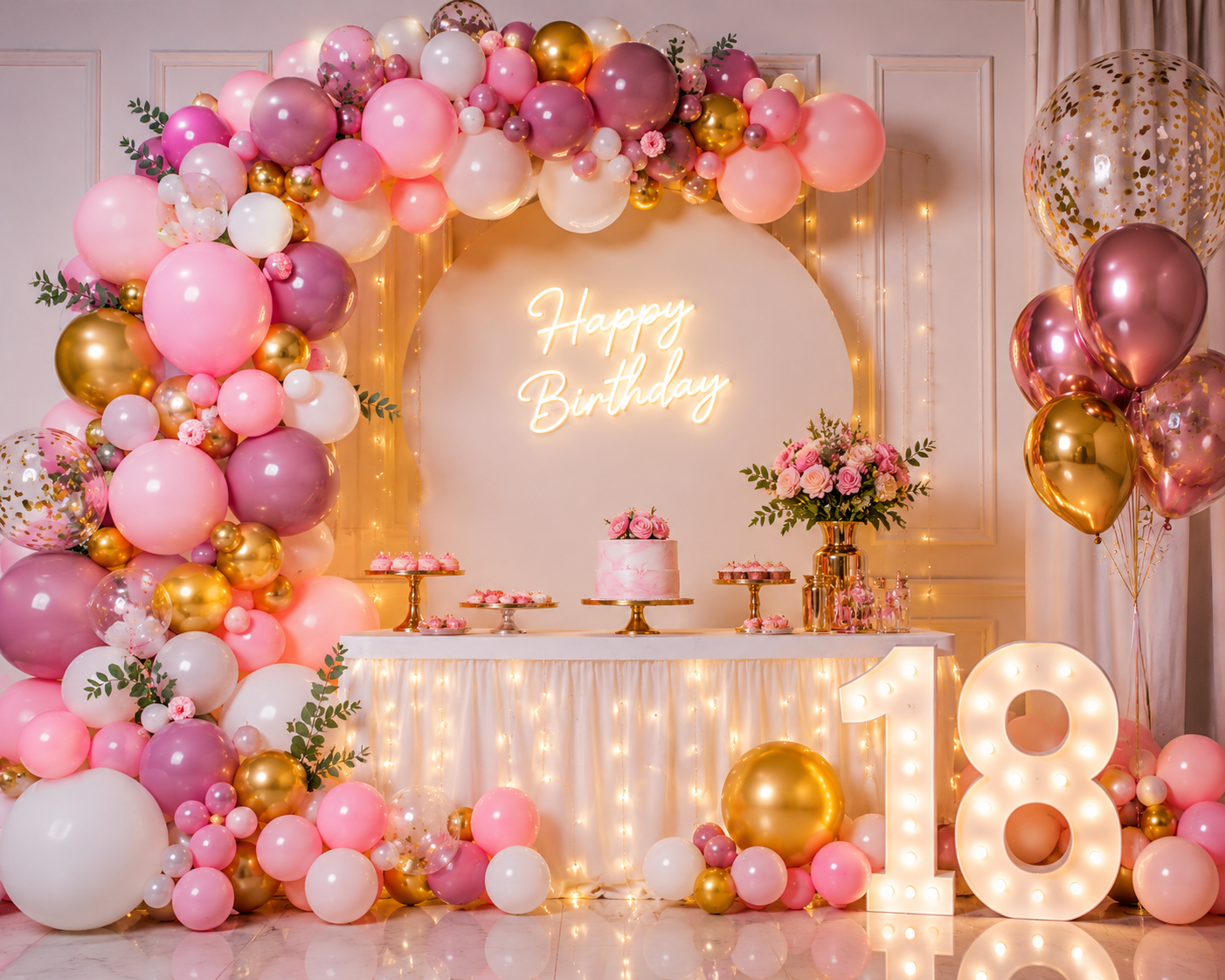
British scientist named Michael Faraday invented party balloons in 1824 for laboratory experiments with hydrogen. But Neil Tillotson invented the first elastic latex party balloons in 1931.
Balloons bring happiness to your face, as they are a colourful, widespread symbol of celebration. Whether they move elegantly at your wedding, emphasise fun with unusual shapes at a birthday party, or appear at an impressive inauguration, balloons have become part of life’s perfect moments.
Wondering when balloons were invented? Or how old are party balloons? The answer comprises science, security, and several experiments that did not go as intended. In this blog, you will dive into the brief history of balloons and explore how a simple rubber weight became a global symbol of pleasure.
Who Invented Balloons?
Balloons are a crucial part of decorations today. Without them, people cannot imagine their parties, and they have a deep-rooted heritage. The first related items appear in Karelia-Finnish classics, in the earliest Roman and Aztec civilisations, and in elaborate, colourful public processions. But it is hard to see them as early versions of today’s multicolour latex balloons that children love to play with. Now, Michael Frayers is known as the inventor.
Who Invented the First Rubber Balloon?
British scientist Michael Faraday discovered the first rubber balloon in 1824 while doing experiments with hydrogen. He made a balloon from two sheets of rubber, joined the edges and covered it with flour to stop it from fusing. He described the balloon as elongating and clearing, similar to a contemporary party balloon.
When Did Balloons Become Popular for Parties?
Although creating balloons from vulcanised rubber was considered a big step in advancement, balloons persisted as a niche product for many years. The factor that drove party balloons into full swing was the excellence of industrial production in the 20th century.
In the 1930s, the Tillotson Rubber Company in the United States established a way to produce latex balloons in large quantities. This required submerging the balloon shape in liquid latex, then curing it and removing the adhesive to produce an uninterrupted, reliable product.
This modern method made balloons affordable and accessible to anyone. As balloons became popular, they shifted from a gimmick to an important decoration for birthday parties, events and holidays. For the first time, they created a rainbow of diverse colours that adds festive charm to your celebration.
When Did Helium Balloons Become Popular?
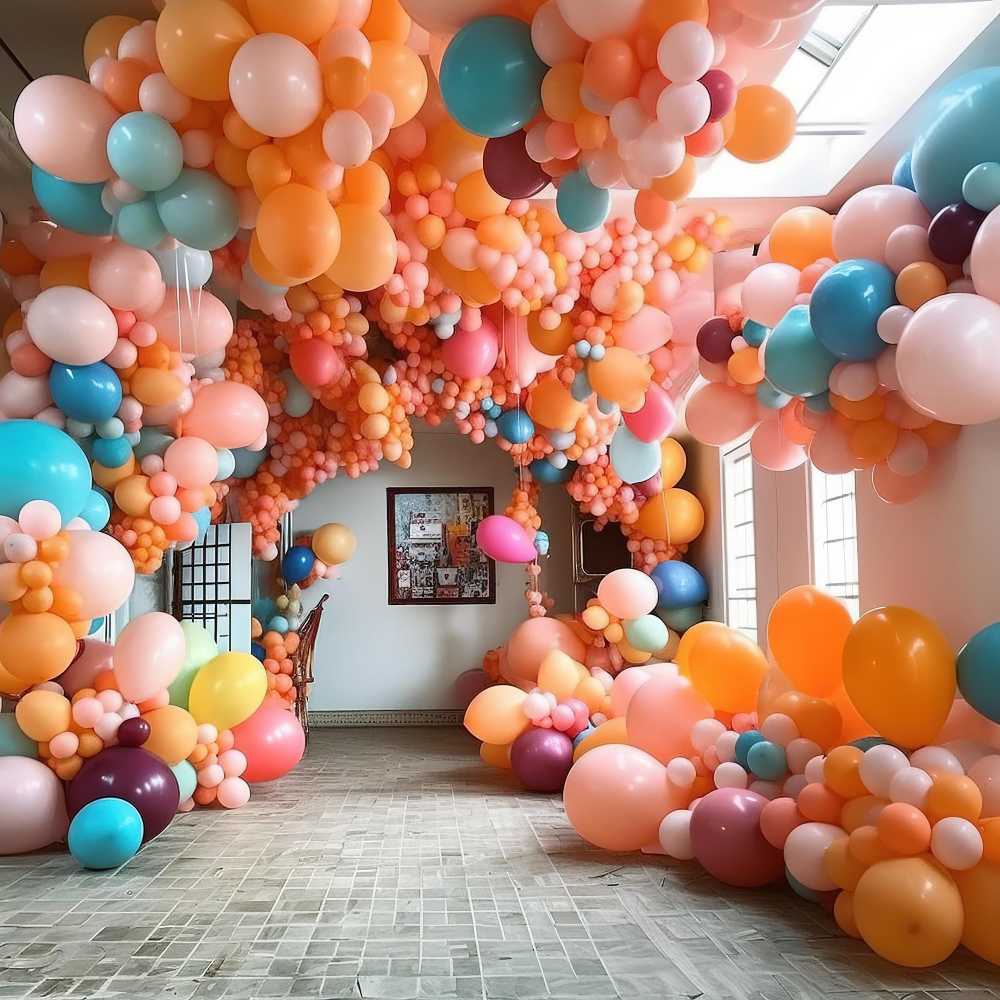
Helium balloons were discovered in 1868. But people quickly abandoned them for decorations. For several years, individuals used hydrogen to fill balloons, which is very combustible. A hydrogen blast in 1922 pushed investigators and producers to discover a safer gas. Helium is non-flammable and harmless, so it immediately turned out to be a popular substitute.
But helium leaks immediately from latex, as its molecules are so tiny. These balloons use foil that retains helium much better and are a perfect choice for longer helium decorations. From then on, helium balloons became a constant at fairs, parades and department store celebrations, ultimately becoming a loved part of any celebration.
How Have Party Balloons Evolved?
Year | Content |
Early 1783 | Galileo exaggerated pig bladders for scientific experiments. |
1783 | Étienne and Joseph Montgolfier tested with hydrogen-filled paper bags. Produced the first hot air balloon. |
1824 | Professor Michael Faraday produced the first rubber balloon. |
1825 | Thomas Hancock presented DIY rubber balloon kits. |
1931 | Tillotson Rubber Company created the first advanced latex balloon. |
1950s | Skinny twisting balloons became extensively accessible. |
20th Century | Balloon colours, shapes, and decorative uses extended. |
Bottom Line
Party balloons have an attractive history going back nearly two centuries. Balloons evolved steadily in shape, design, colour, and use, from Michael Faraday’s first rubber balloon test in 1824 to the rise of ready-made latex balloons in the 20th century. Because they are safer and more realistic for events, these balloons serve as a staple at parties, parades, weddings, and other celebrations. Elevate Decor by Sam offers creative balloon decoration options that bring this long-standing tradition into modern celebrations.
Nowadays, party balloons go far beyond basic decorations, with countless styles and artistic designs available for every event. Although the first rubber balloon was designed in 1824, the modern party balloon emerged much later and has since evolved into a timeless symbol of festivity and fun.
Table of Contents

Copyright © 2026 Elevated Decor By Sam. All Rights Reserved.
© 2026 Elevate Decor By Sam.
- Home
- About
- Services
- Anniversary Celebration Setup Decoration
- Baby Shower Balloon Decoration
- Helium Balloon Decoration
- Balloon Arches
- Balloon Artist
- Birthday Balloon Decoration
- Corporate Launch Event Decoration
- Balloon Decoration
- Event Decoration
- Hotel Room Decoration
- Luxury Engagement and Proposal Setup
- Party Balloon Decoration
- Pricing
- Gallery
- Testimonials
- Blog
- Contact
